
You need to sleep well, it helps your mental health
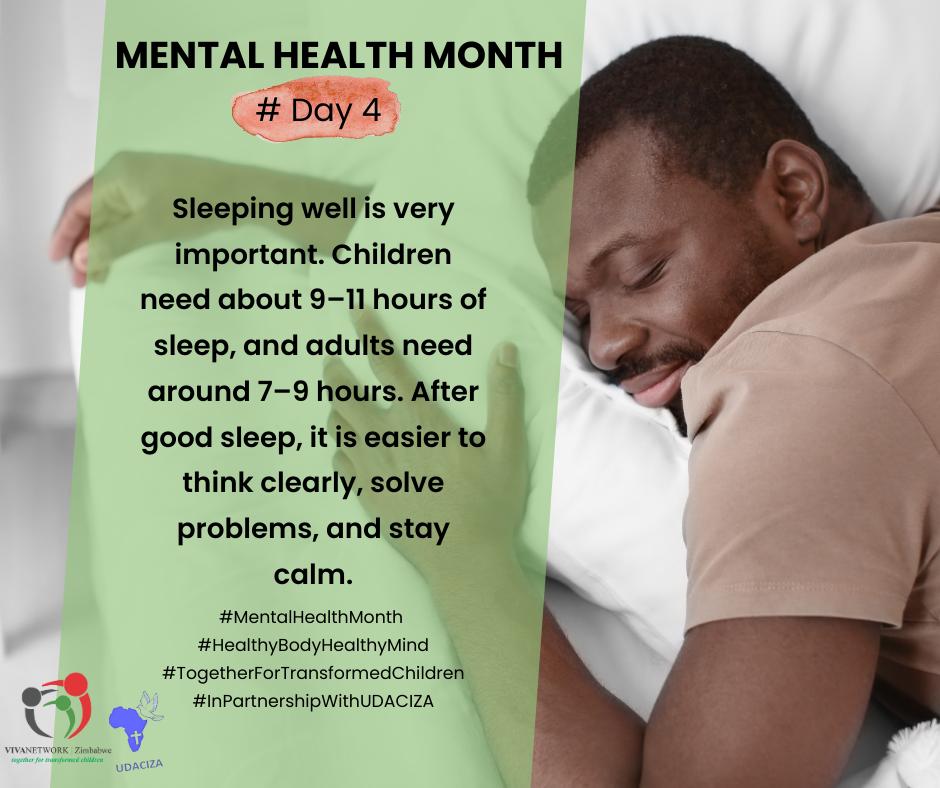
Today we focus on something simple yet often overlooked: sleep.
A rested mind is stronger, calmer and better able to protect children.
Many adults push through exhaustion, and many children go to bed late because of noise, screens or busy routines. Yet sleep is one of the most powerful tools we have for mental health.
When children sleep well, they learn better, manage emotions better, and handle stress more easily. Adults also think more clearly, make better decisions, and remain patient and calm.
Here are practical steps families can take:
1. Create a Simple Bedtime Routine
You don’t need anything fancy.
Choose two or three calming activities before bed:
- bathing,
- reading,
- light music,
- quiet conversation.
The routine tells the brain: “It’s time to rest.”
2. Reduce Screen Time Before Bed
Phones and TVs keep the brain alert.
Try switching them off at least 30–60 minutes before sleep for both adults and children.
3. Keep Bedtimes Fairly Consistent
A steady sleep schedule trains the body to rest naturally.
Children especially benefit from a predictable rhythm.
4. Make the Sleeping Space Calm
Soft light, less noise, comfortable blankets.
A peaceful environment helps the brain settle quickly.
5. Watch Out for Signs of Tiredness
Children often show tiredness through:
- irritability,
- difficulty concentrating,
- emotional outbursts.
Adults show tiredness through stress, forgetfulness or impatience.
When you see these signs, encourage rest.
6. Prioritise Your Own Sleep
You cannot pour from an empty cup.
Adults need 7–9 hours, and children need 9–11 hours.
Protecting your rest strengthens your ability to care for children.
Today’s Action
Choose one sleep habit to improve tonight, just one.
Maybe go to bed earlier, put your phone away, or start a quiet routine with your child.
Better sleep builds stronger minds, calmer homes and healthier communities.
#MentalHealthMonth #HealthyBodyHealthyMind #TogetherForTransformedChildren